
About Us
Signal over noise.
Why END Audio?
END Audio aims to deliver exceptional sound quality at an accessible price.
Why END-1?
END-1 is the best listening experience for extended treble and natural tonality at an accessible price. Only a properly room-treated 5.1 or 9-channel speaker system can exceed END-1 on spatial imaging and treble extension in ideal conditions.
END-1 is IEC 711 measured, channel-balanced, and hand-tuned per unit - with four types of sound available: Diffuse Field, Harman, QDC, and JM-1 via minimum-phase convolution; swap targets without buying a new IEM.
Why In-Ear Monitors?
In measurement-driven audio, IEMs are often preferred because the signal path has fewer uncorrectable variables; group delay (timing smear from filters) at multi-way crossovers, comb filtering (peaks and nulls when sound combines with delayed copies of itself) from room and cup reflections, speaker positioning, and room treatment.
Sean Olive's room correction research at Harman found that commercial loudspeaker room correction is inconsistent; some products perform no better than uncorrected speakers, and listener preference tracks spectral balance at the listening seat, which shifts with room and position. Speakers inherit those problems; IEMs structurally skip them.
Multi-way speakers and multi-driver IEMs rely on crossover filters that introduce group delay and phase distortion around split points; correcting it costs latency (FIR) or complex analog topology (crossover group delay). END-1's coaxial driver, 11 mm woofer and 8 mm tweeter on one acoustic axis, is simpler than separated multi-BA layouts, and the sealed canal path avoids speaker-room and headphone-cup variables entirely.
Speakers comb-filter against room boundaries; the fix is treating reflection points (comb filtering explained). IEMs eliminate room interaction so the sweet spot travels with you. Over-ear headphones reflect sound inside the ear cup, producing position-dependent peaks and nulls that change every time you put them on. A sealed IEM fixes driver-to-eardrum geometry and our specifically chosen eartips provide deep insertion that is stable, comfortable and consistent.
What we create
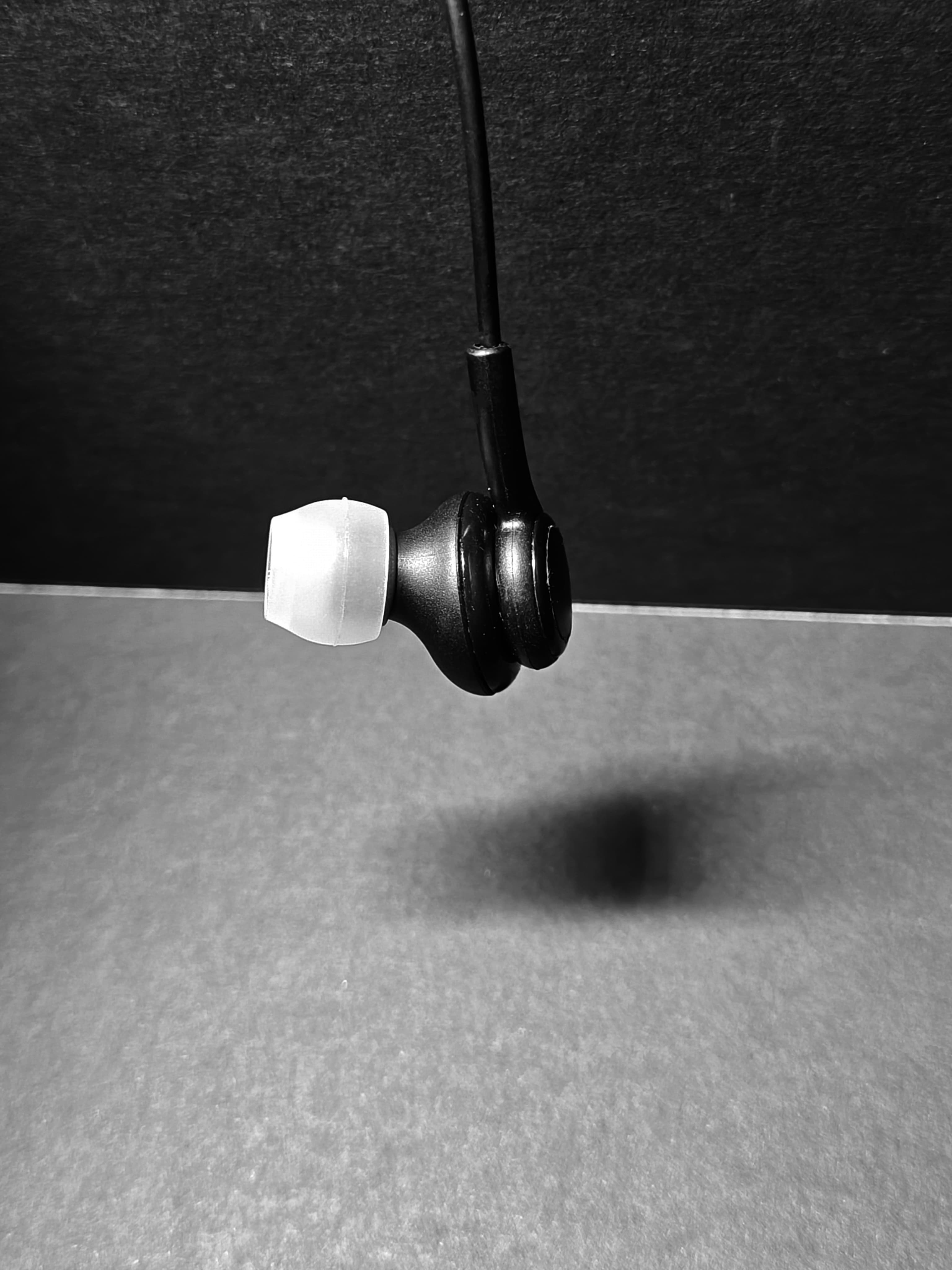
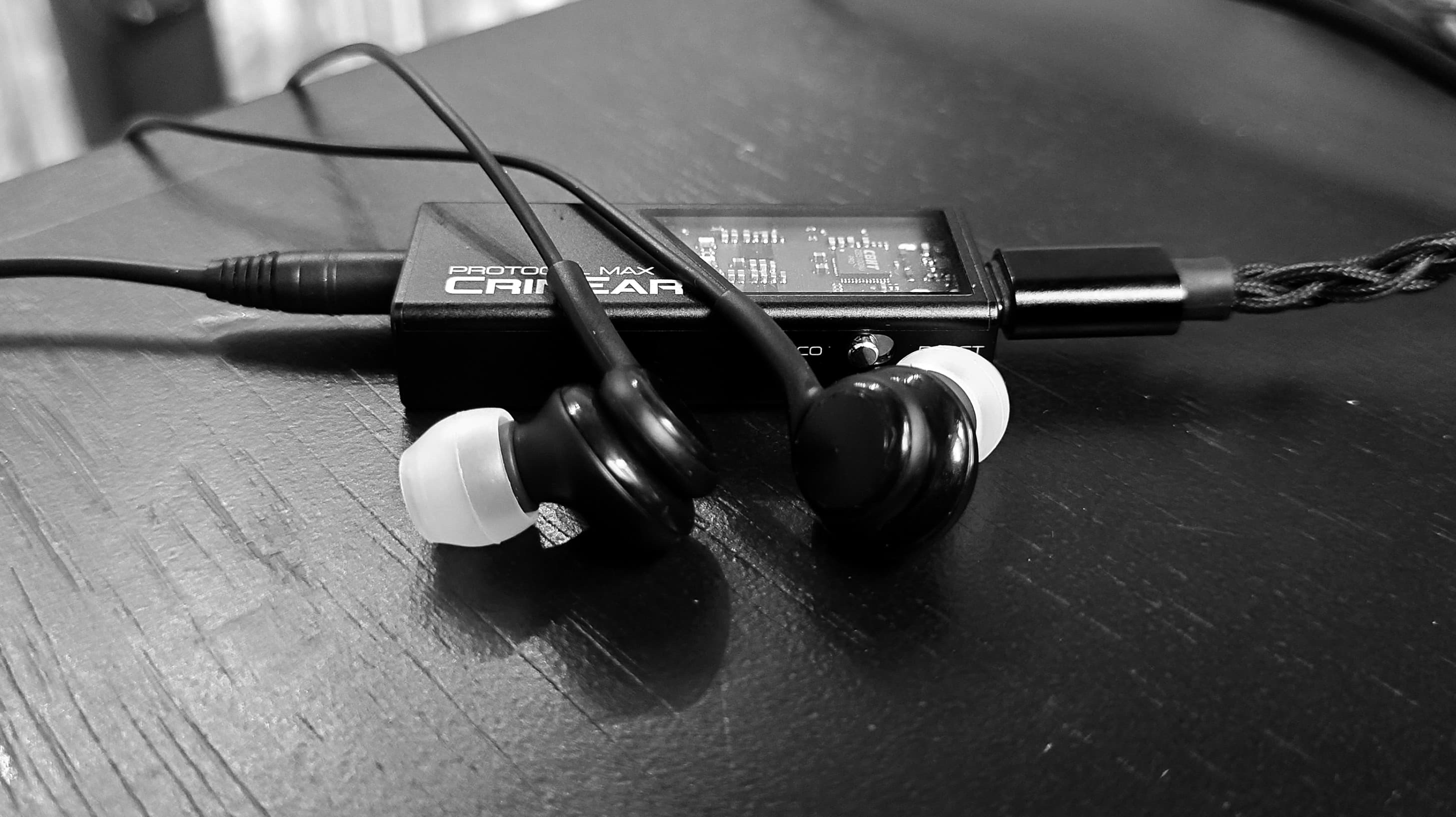
We start with the Samsung EO-IA500, an off the shelf, commercially available coaxial driver IEM with an 11 mm woofer and 8 mm tweeter. Through per-unit measurement, careful tuning, and rigorous QC we achieve END-1's natural tonality, note weight, and precise detail retrieval. See IEM EQ Guide: Myths & Misconceptions for why measured response matters more than driver hype.
Tri Clarion eartips are part of the complete acoustic system; deep insertion is intentionally part of the calibration, aiding treble extension above 10 kHz.
Unbalanced L & R channels distort stereo imaging performance, which is why every END-1 is measured and corrected per unit so left and right track within ±1 dB before tuning and impulse-response shaping. See Specifications for the calibration pipeline.
Every unit is exclusively yours: measured on an IEC 711 coupler, channel-balanced, and hand-tuned before it ships. We operate with a small batch, artisan approach.
We shape that balanced hardware with precise convolution and impulse-response modelling; one transducer, four styles of sound. See Impulse Responses for the target response curves, and How To for setup.